
Interview with artist Jacen Burrows

Q: How did you get started as an artist and comic book artist?
I was always drawing as a kid and I just never stopped. I was always aware of comics and enjoyed looking at the art, but I didn’t start to really get into them until I was 11 or 12 and had a group of friends who collected. I started going to comic stores with them and fell in love with the medium. Then one weekend, a group of us went to a local comic show and Eastman and Laird were signing TMNT books. I think at that point, they were maybe up to issue 4, so it was before things really exploded, but it was the first time I realized that these things were made by regular people. I decided this was what I wanted to be right then. And seeing them become rich and famous might have instilled an unrealistic idea of where the results of a life in comics would lead but it’s been a fun ride.
Q: You’ve worked with writers like Alan Moore and Garth Ennis, what were your reactions working with them for the first time and how do those relationships evolve over time?
It started with Warren Ellis. I was among the freelancers working at Avatar Press when he decided to set up his creator owned psuedo-imprint at the company. He picked me for DARK BLUE which led to several other projects. I was still pretty raw but I showed I would work hard and focus on adapting the script as accurately as I could. When other writers started setting up their projects I was in the right place to get the gigs, but I didn’t know any of them beforehand. The relationships developed through the collaborations and then through meetups at cons or, in Alan’s case, visiting Northampton a couple of times. But I find that as long as you are committed to the project, put storytelling first, and treat everyone professionally and respectfully, you tend to keep the same collaborators.
Q: How does the process typically work? Do you get a script from the writer and take it from there? Usually how much collaboration is there during that process?
I’ve always gotten full scripts from writers. I honestly have no idea how working in the plot driven “Marvel Style” would work. It would be a fun experiment but I tend to like having a good amount of direction in the script. There is always thought behind it and I trust the writers I work with to do things with intention. I think you see the most collaboration in the preproduction stage where you are doing character designs, talking about covers and visual motifs that may run through the book.
Q: How many hours or days go into drawing a single issue comic?
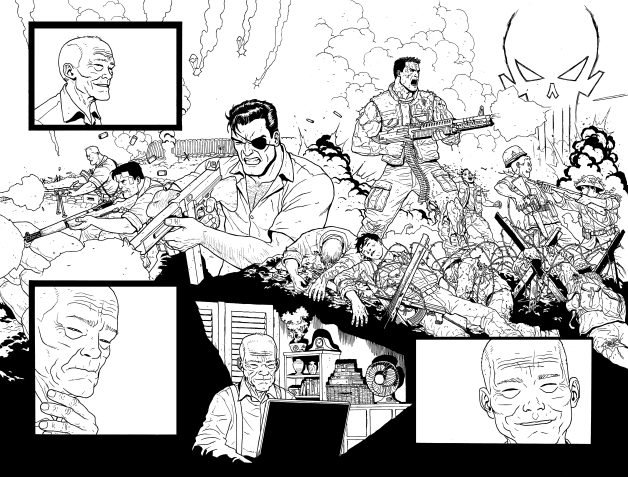
I’m a bit slower than the average monthly guys so my sweet spot is really bimonthly. If I have 2 months per book I can pack it with detail and spend the time I need to correct the weird anatomy issues that pop up or research some detail from the period or region to give it a layer of authenticity. I genuinely love researching stuff like that. If you give me a period piece, I’m going to have folders packed with images and details, most of which will never get used but help me build a consistent mental build of the place. I want to live inside the settings since I’m going to be there for a year or so.
Q: How much has the comic book industry landscape changed since you’ve been in it?
At this point I’ve seen a lot of phases and trends. Comics have really short generations of creators because it is a tough industry to stay in due to the competition and low reward to effort ratio. You see passionate and talented creators pop up, make a splash, and drift into other industries that pay better or offer stability (and health insurance). So I’ve seen several generations come and go at this point and they always change the feel of what is happening at the big 2 and the creator owned space. I love seeing what new visual approaches bubble to the surface from the ever widening pool of influences out there.
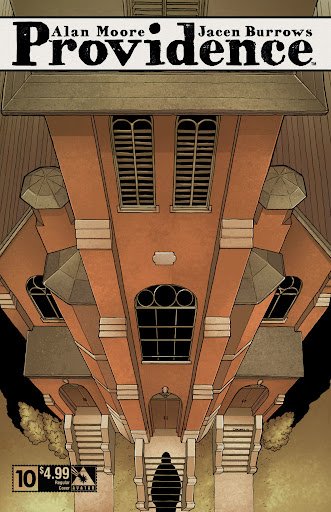
Q: There is so much detail in books like PROVIDENCE, especially the architecture. How much research do you typically do to make those details historically accurate?
Tons. For PROVIDENCE Avatar actually hired research assistants to comb through historical records and visit regional libraries. There were stacks of old books and print outs from obscure sources. So much of that book was about real world history so where it could be verified, we did. I would go so far as to grab street images off of Google Earth and look up the history of the addresses to see if we could find what buildings were in that spot in 1919 and rebuild the street for locations that weren’t even part of the narrative. Just to be as accurate as can be. That was a unique project, and I knew I’d never get to do something that obsessive again, so I went all out.
Q: Did you have to study horse genitalia in depth to draw Horsecock from Crossed?
Of course! If he’s going to make his whole identity about his chosen weapon, I owe it to him to get it right. Although if you’ve seen one, you’ve probably seen them all, right?
Q: You’ve drawn books such as Crossed and Ribbon Queen and you are very effective with portraying violence and gore. Is that something you’ve always had a talent for? Do you ever feel the need to one-up yourself and push boundaries?
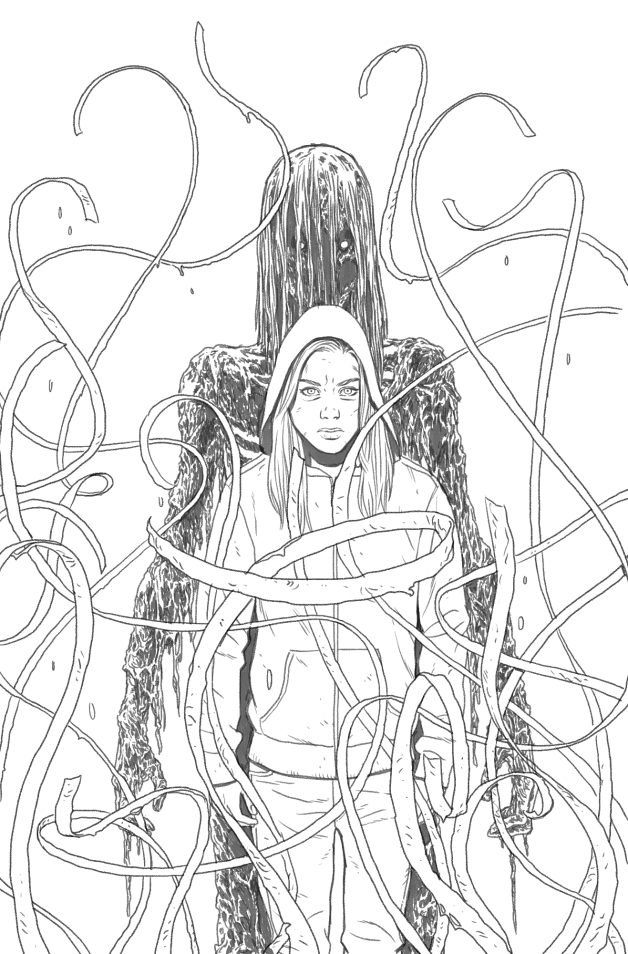
Even as a kid, when most of my friends would be drawing superheroes, I was drawing monsters. My sketchbooks were full of werewolves and vampires. Horror is in my DNA so even when I draw sci-fi or war stories, the horror always sneaks in. But while I don’t ever shy away from showing the nastiness, I do try to depict it how I think it would really look. I think it is most effective when you have believable anatomy. And I try to keep the more overt splatterhorror elements for big story moments.
Q: Is there a book, character or writer on your bucket list that you would love to work with?
There was a time when Avatar was at its peak that they were in talks with Brian K. Vaughan, Jason Aaron, and Brian Azzarello to do a creator-owned series and I would have been exuberantly available to them if it had materialized. But, honestly, I have no idea if these were ever more than a whisper of an idea that never had a chance to happen or if real progress was ever made.
Q: What would readers be surprised to learn about the comic book industry and being an artist?
Unless you are one of the very best people making comics, there isn’t much fame or financial reward waiting at the end of your labor. The reward is the time spent creating something that wouldn’t exist without your time and unique collection of influences. Everyone who makes comics does so because of a love for the medium and you can experience that yourself. Write stories, draw for fun in whatever time you can make. Create something from your own imagination. It’s incredibly satisfying. You don’t have to great at it to get the mental benefits of making art.
Q: What advice would you give to an aspiring artist?
Try to stay passionate. Keep some people in your life who also love this stuff, if you can. Never stop hunting for new influences. Other creators are not competition, they’re peers. And be honest and professional with your editors! They’ll save you so many headaches if you keep that line of communication open.
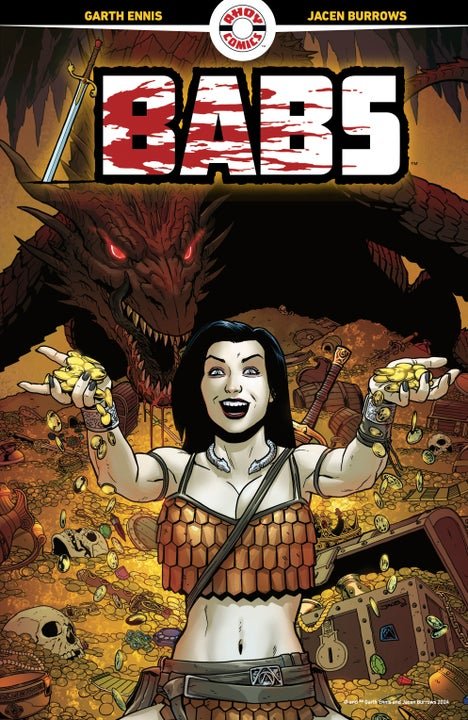
Q: Babs recently wrapped up. Can you tell us if we’ll be seeing our favorite foul mouthed heroine again soon?
We haven’t seen the last of her. Garth and I had too much fun with her adventure to not want to go back at some point.
Q: What are you currently working on?
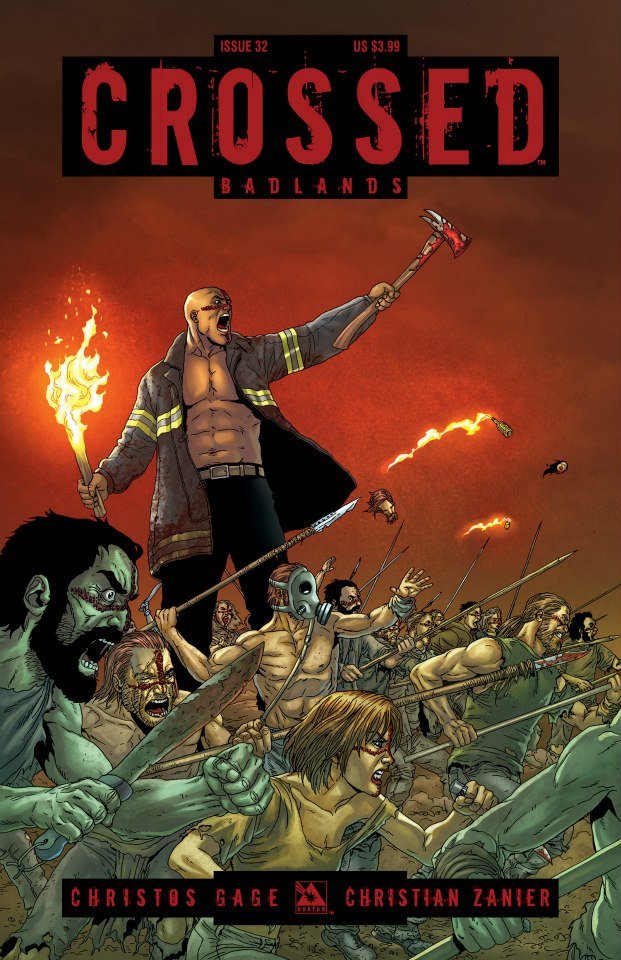
I have actually been helping with the Crossed film production. A little bit of character and environmental design and some minor storyboarding. It’s been really fun getting to revisit something I worked on way back in 2008. I’m pretty excited about what they are building. If I had made a wish list of what I thought would make a Crossed movie work, those boxes have all been checked.
Q: What do you enjoy doing when you’re not working?
What is this “Not Working” you speak of? But seriously, I worked in restaurants all through college and I still really like cooking, and when I do have a little free time I still really enjoy gaming. Be it table top or video games. We all need a little escapism. I just wish I was a little better at time management because it can take me ages to get through a 60 hour game. But I really enjoy the world building that goes into games.
Leave a Reply
You must be logged in to post a comment.